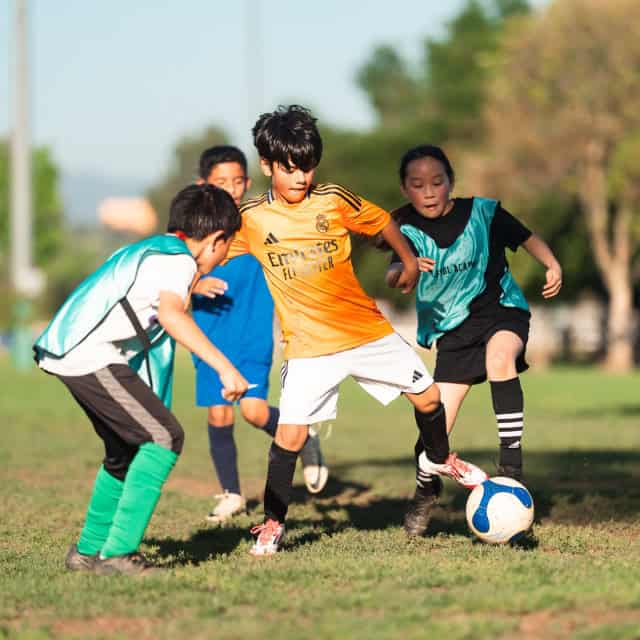
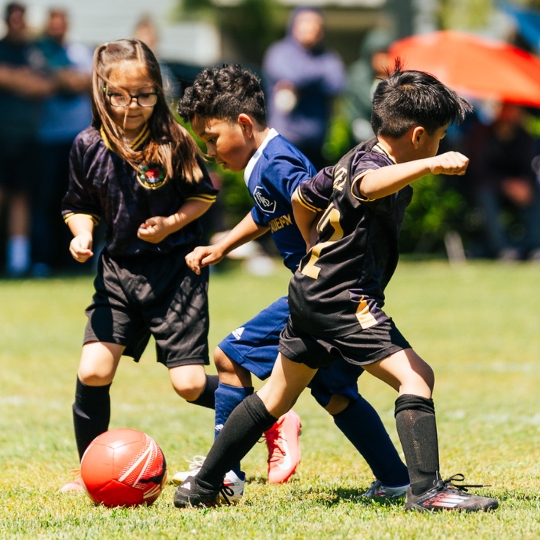
How FTBL works · Youth soccer training · East Pasadena

One curriculum, five to fourteen.

Soccer training at FTBL Academy in East Pasadena, explained in six steps. Every player works on the same things in the same order. What changes is the group, the speed, and how often they train. The coach decides where your child starts. You decide how many days.

Free. No tryout.

The method, step by step

This is the whole thing. Nothing here is hidden behind an enrollment.

The first session is the placement.

Your player trains a full session with the group we think fits. You watch the whole thing. Within two days a coach tells you what they saw, where we’d start your child, and why, including when the answer is “not yet.”

A written plan within thirty days.

With your child’s name on it: what they’re working on this quarter and what we’ll look for next. Not stars or grades.

Two evenings a week at The Lab.

The player comes back before the last session has faded. Same days and times all year. Sixty minutes in Foundation One, seventy-five in Foundation Two, every minute on the ball.

Skills at Home on the other days.

Short, specific work a child can do in a driveway. The session plants it; the week grows it.

Two family reviews a year.

December and May. The plan on the table, the coach across from you, growth you can see each quarter.

Move up by evaluation.

A player moves when the coach’s eye says they’ll be challenged at the next rung, not on a birthday. Foundation One to Two. Academy Teams from the training group, Foundation players first.

What a session is

Written before anyone arrives, and every coach runs the same one. A ball-mastery warm-up, a technical block on one core skill, small-sided games that force the skill into use, a short review with something to practise at home.

A five-year-old and a thirteen-year-old work on the same things. The difference is speed, pressure, and how much they solve on their own. The demand rises. The curriculum doesn’t.
The programs

Not sure which is yours? That’s the normal case. Come to a session and we’ll tell you.

Ages 5–10 · 60 minutes

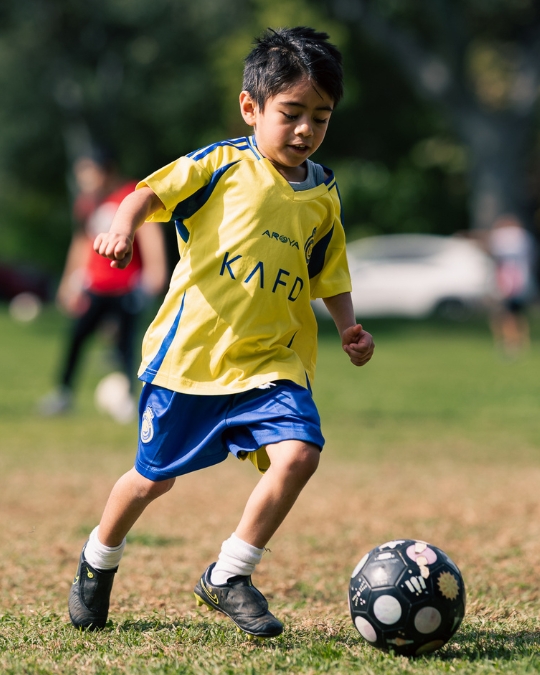
Learn the ball. Ball mastery, first touch, 1v1 confidence, at a pace where beginners succeed early. Open to any player.

Mon–Fri 5:00pm · Sat 10:00am

Ages 8–14 · 75 minutes

The same skills at game speed, in tighter space, against real resistance. For the player who has a base and needs it tested. Open to any player; the coach places them.

Mon–Fri 6:15pm

Ages 12+ · By evaluation

Semi-private: two to four players matched by level, for players competing at a good club or high school level who need the reps team practice has no time for. Private: one player, one coach, one to three sessions to fix one specific thing.

Goalkeepers

Handling, footwork and the decisions before the shot, taught by a keeper coach.

U6–U14 · By evaluation

The teams inside the training club, for families who choose that pathway. A local league season, kit and fees included. Nobody is recruited and nobody is asked to leave anything.

Plans

Billed monthly. Foundation One and Two share the same rates.

Introductory | 1x/wk

Once a week. A five-year-old trying it out, or a child balancing another sport. Real, and not a development plan.

$150 /mo

Standard | 2x/Wk

Twice a week. Most FTBL players train here.

$225 /mo

Accelerated | 3x/Wk

Three times a week. Mostly Foundation Two.

$275 /mo

Academy Teams

Training + uniform, fees included

$250 /mo

Semi-private

1×/week $200 · 2×/week $400

$200 /mo

Private training

Per session

$75

Train with us. Play anywhere.

Most FTBL players keep their Saturday or club team. We do the individual work during the week. No conflict, no pressure to leave.

Good to know

Is there a tryout?

No. Foundation One and Two are open to any player. Academy Teams and semi-private are placed by evaluation, on the field, by coaches who’ve watched your child train.

Your player trains the full session with the group we think fits. You watch. Within two days a coach tells you what we saw and where we’d start them. No sales conversation.

Yes. Our staff is bilingual, and we work with families in both Spanish and English.